By Anastasia Silver
We got kicked out.
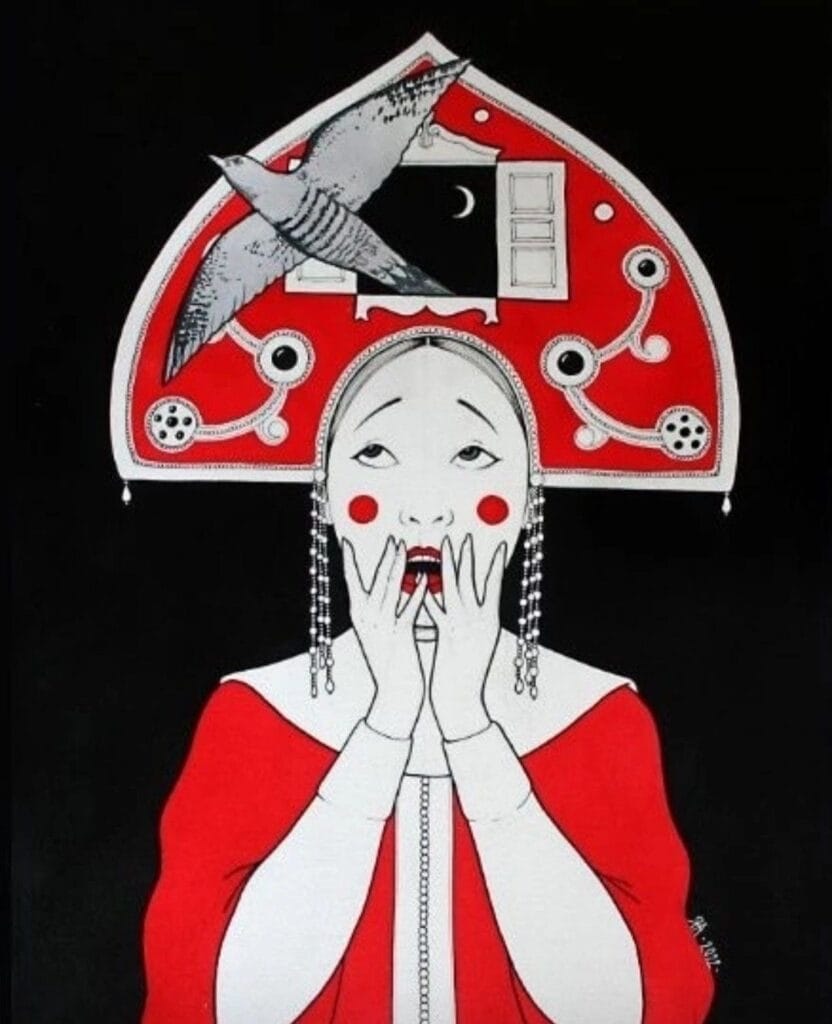
Not from a nightclub or a women’s circle where everyone pretends to be a forest nymph, but from our lovely Balinese villa. The official explanation was “fire hazard,” which technically referred to my weekly burnt cooking. Unofficially, both burnt onions and Slavic software qualify as ignition risks.
Nothing dramatic happened. Nobody screamed. Nobody slammed doors. My Eastern European husband merely spoke, normally, in his native “why waste emotions” register. A few long, serious, monotone monologues about the trash schedule and missed spots while dusting. But to our Balinese housekeeper, this sounded like thunder rolling in over the rice fields. She didn’t know whether to quietly back away, pray, or hand him a banana as a peace offering.
Consider this your unofficial Bali newbie expat briefing: “If you’re Eastern European, your resting face might terrify the locals.”
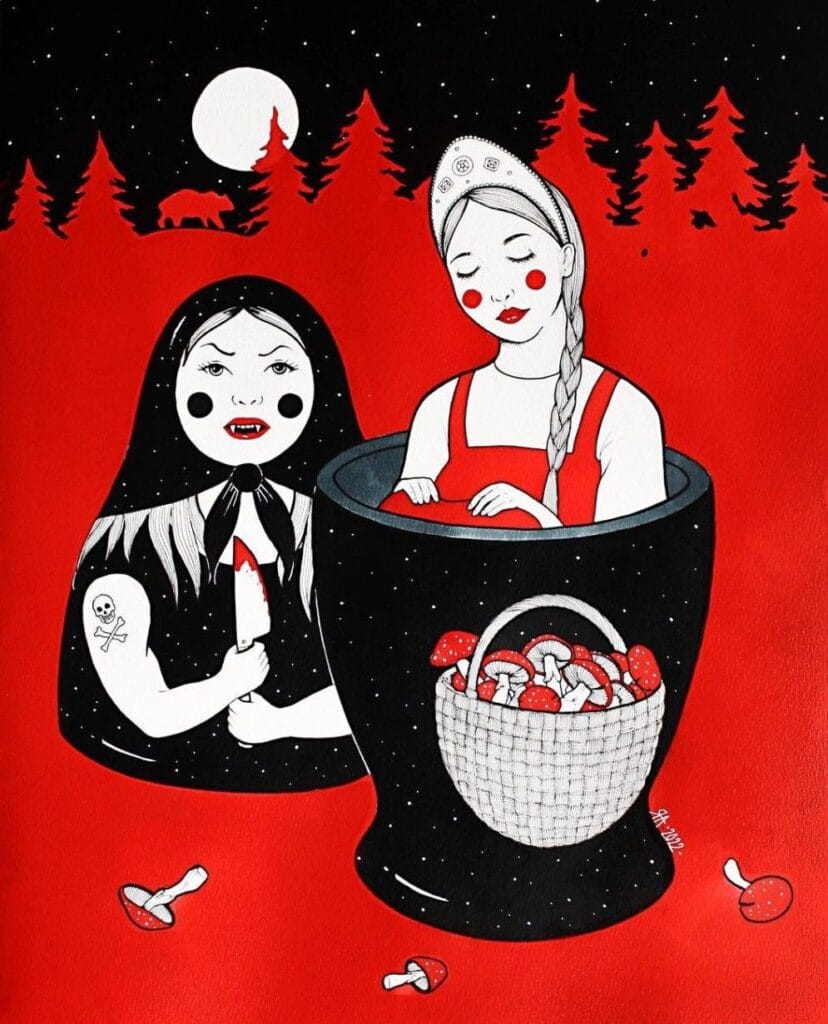
I tried to help, of course. I explained that my husband’s serious tone was not anger, nor was his lack of a smile a sign of hatred. “He is not angry with you,” I’d say. “He is just… Slavic.”
To us, a neutral expression is integrity. To Balinese ears, it’s level-one aggression. In their cultural dictionary, our normal style of communication is “kasar” – coarse, intense, conflict-creating. Meanwhile, the Balinese ideal is “halus”: gentle, soft, indirect, harmonious, and always wrapped in the peacekeeping power of a smile.
We, on the other hand, come from the psychological tundra. We are the people who believe a smile must mean something. We don’t scatter them like canangs. We use them sparingly, like a rare spice. A smile must be earned. Slavic communication is honest, efficient, blunt in the name of truth. Balinese communication is harmonious, smooth, indirect in the name of social survival.
And in between these two climates was our landlady, a serene passive-aggressive goddess of order whose villa rental contract should have warned us. Too many clauses felt like the emotional version of a chastity belt: no nudity of any kind, no overnight guests, no loud voices after dark. This woman micromanaged the placement of towels like the spiritual feng shui of her villa depended on it. We were guests, but also potential disruptors of the delicate Balinese equilibrium she curated with religious precision.
So when the housekeeper registered my husband as a potential seismic event after too many of his attempts to converse with her, the landlady stepped in. Naturally, she couldn’t say the real reason: “Your husband talks like warrior chief and this disrupts our spiritual Wi-Fi.” Direct confrontation is culturally impossible. Instead, she delivered the soft, porcelain-glazed explanation: “There were… incidents with the cooking.” And so my soup, in its innocent smokiness, became the sacrificial offering that restored harmony.

Here’s the philosophical contradiction that Bali forces you to metabolize: the Balinese openly embrace darkness in ritual – demons, spirits, masks with teeth, fake ceremonial suicides and blood offerings. But a slightly raised eyebrow? A direct statement like “I disagree”? Absolutely not. Ritual darkness is allowed; interpersonal darkness is radioactive. A demon mask will not upset harmony. A Slavic facial expression will.
This island runs on social equilibrium, where smiling through discomfort is moral strategy. For us this is deception. Slavic culture runs on emotional realism. We don’t do harmony for harmony’s sake. We do truth. If something upsets us, our faces will show it. If we’re processing conflict, our tone deepens. We don’t like to ‘smooth it over’, we sit in it like a sauna.
The next day after kicking us out, the housekeeper was all smiles. Glowing, radiant, greeting us with the same cheer as if she hadn’t just escorted us from paradise. This was her way of restoring balance. Meanwhile, I stood there unable to produce even a polite half-smile, because in my culture that would be hypocrisy. In hers, it was healing.
In 10 years in Bali this was my first eviction. It was the initiation any newcomer must learn – eventually you will offend someone simply by existing in your normal native psychological settings. Bali will keep doing Bali. And we’ll move on, still Slavic, still too intense, and a little wiser about which environments can actually hold us. Or at least having invested in fireproof cookware.
_______
We welcome your Bali stories in all forms: personal experiences, cultural insights, moments of clarity, essays, or creative experiments. If the island has shaped you, or if you have something meaningful to say while visiting or living here, we’d love to hear it.
Send us your idea (just the concept, not the full piece) at hello@modernwomenbali.com